

Sister Mary
Instruction on Comprehension and Judgement
In her epistle to the poets, Cavendish notes that as women seldom write, her own act of writing may be ridiculed, as the strange and unusual seem fantastical, the fantastical seems odd, and the odd seems ridiculous. She requests that her work be judged by reason, not prejudice. She then excuses any weaknesses in her poetry by stating that she writes only to get away from melancholy thoughts and to fill idle time. She employs a food/feasting metaphor and states that her poems are not ripe, but that applause and praise will make them pass as a 'general feast' to those of vulgar taste who take quantity over quality. As is typical to Cavendish, applause is welcome and criticism censored, as she advises those who do not like her poetry to keep silent. She also states that hers are poems of fancy and thereby require study. She recommends that as one with a troubled conscience ought to look to a minister for guidance, so should the reader ask a poet for help in understanding her poems. Attempting once again to guide the reader to a positive reception of her book, Cavendish draws a distinction between poets (able judges of poetry) and rhymers (faulty judges of poetry) and advises people not to say that her book is nonsense or poorly constructed out of their own ignorance and malice. Returning again to her desire for fame, Cavendish notes that if an honest poet, who is not envious, judges her work, it will receive applause.
Cavendish asks that the reader read her fancies (poems) slowly and pay attention to every word because every word is a fancy itself. She warns that if readers lose their place or miss lines, they will miss the meaning of the entire work.
Poems: Excuses and Instructions
Cavendish follows some of her epistles with poems that instruct the reader in how the poems came to be published and how they should be received. The proximity of the poems to the epistles and their similarity in subject and tone, suggest that they may be interpreted as being written from Cavendish’s own point of view.
The poem The Poetresses hasty Resolution, like many of Cavendish’s epistles, expresses excuses for any errors that may be found in the poet’s work and begs for praise. In the poem, the poet states that self-love influenced her judgement of her own poetry, which she found she liked so much that she was moved to continue writing in hope of fame. She states that she wrote without thought to how her work would be received by critics. The poet then recalls how she was visited by Reason who advised her to stop writing. Reason told the poet that her writing was a waste of time, that her work would not be well received and that she should not have her work printed so as to avoid causing the printer to lose money. Reason also informed the poet that there are already too many books and that she should burn what she has written and spare the world. The poet notes her angry response and states that she sent her book to press before she could be persuaded not to. Hindsight, however, has made the poet regret her actions. Informing the reader that she feels shamed by her writing, the poet tells the reader to pity her and wipe away her tears with praise.
In The Poetresses Petition, the poet compares a negative reception to her books as their death. If the books must suffer such a death (criticism), the poet requests silence and that they be forgotten, without altar or inscriptions, and left undisturbed unless new merit is found in them. Again, Cavendish would censor criticism and promote fame, instructing that only positive criticism should be voiced.
In An Apology for Writing So Much upon This Book, the poet compares her book to a child and compares the book/child and author/parent to birds. The book, she states, is like a baby bird just going on its own. The author, like a parent bird, is unsure whether or not the book/baby bird will be safe and writes/chirps in an attempt to protect it.
Observations upon Experimental Philosophy (1666)
Cavendish’s Natural Philosophy
Eileen O'Neill offers an overview of Cavendish's natural philosophy and its critical reception in her introduction to Observations upon Experimental Philosophy.[14] O'Neill describes Cavendish's natural philosophy as rejecting Aristotelianism and mechanical philosophy and favouring Stoic doctrines. She notes that while women rarely wrote about natural philosophy in the seventeenth century, Cavendish published six books on the subject.[15] O'Neill points out that Cavendish herself was not formally educated in natural philosophy, though William Cavendish and his brother Charles shared an interest in the subject and supported Margaret's interest and study in the area. Cavendish may also, as O'Neill notes, have been influenced through social encounters with philosophers such as Thomas Hobbes. O'Neill believes that Hobbes (who had instructed Charles in philosophy) had significant influence on Cavendish's natural philosophy and notes that Cavendish was among the few seventeenth century supporters of Hobbes' materialist philosophy, which argued that incorporeal souls do not exist in nature. Beginning in the 1660s, O'Neill notes, Cavendish began to more seriously study the work of her contemporaries. O'Neill suggests that such study was intended to enable Cavendish to better argue her own points by contrasting them with those of other natural philosophers.
Critical Response to Cavendish's Natural Philosophy
O'Neill notes that Cavendish's natural philosophy, and writing in general, was criticised by many of her contemporaries as well as by more recent readers, such as Samuel Pepys, Henry More and Virginia Woolf.[16] Cavendish's work has also received positive criticism and she is lauded by many for such reasons as having written on typically male dominated subjects, such as natural philosophy. Letters and poems of praise written by her husband were included in several of her published works.
Writing as an Honourable Disease
In her preface to Observations upon Experimental Philosophy, Cavendish states that she expects readers to say that her practice of writing prolifically is a disease.[17] If so, Cavendish states, then many others, including Aristotle, Cicero, Homer and St. Augustine, have also been very ill of the same disease. She remarks that it is an honour for someone of great ambition (as she has often identified herself) to share the disease of such wise and eloquent men. Also common to her other writings is her assertion that she writes for herself and that her writing is a harmless pastime when considered in comparison with those of many other women. She does contradict herself, however, by adding that she writes for delight, which she had denied in her previous work. Also somewhat contradictory is her assertion that she would continue to write even if she had no readers, which is not in line with her desire for fame. Ultimately, Cavendish excuses her criticism of and engagement with the theories of other natural philosophers as a necessary step in the search for truth.
Learning versus Wit
In her epistle to the reader, Cavendish writes that woman's wit may equal that of man, and therefore women may be able to learn as easily as men. She argues that wit is natural, whereas learning is artificial, and that, in her time, men have more opportunity to educate themselves than women do.[18]
Cavendish remarks upon her own experience reading philosophical works. She notes that many such works challenged her understanding, as they often contained many difficult words and expressions that she had not previously encountered. It follows that Cavendish advises writers of philosophy to use language appropriate to aiding the understanding of those less expert than themselves. Cavendish defends her position by stating that philosophical terms ought to ease communication of one's thoughts on the subject. She believes that successful communication is possible in all languages and criticizes those who complicate communication (particularly English writers) as aiming to gain esteem from those who admire writing simply because they do not understand it, without considering that it may be nonsense. In her own work, Cavendish states, she chooses not to uses difficult terms, although she points out that she understands such terms. Her stated reason for this is that she desires her work to be accessible to people regardless of their degree of learnedness. Her aim, she states, is to clearly communicate her ideas. She requests that any errors that may be found within her work be overlooked and that readers remain focused on her main ideas. Here, as in many of her epistles, Cavendish instructs her reader in how to approach her work, requesting that readers read her work in its entirety and that they withhold criticism until they have done so.
The Description of a New World, Called the Blazing World (1666)
Main article: The Blazing World
Cavendish's prose tale was published in 1666 and again in 1668, each time it was published with Observations upon Experimental Philosophy."[19]
As noted by many, including Silvia Bowerbank and Sara Mendelson, this early version of science fiction criticized and explored such issues as science, gender and power. Cavendish writes herself into the book, which details a fictional new world (not just a new continent but an entirely separate world) and its empress. She remarks in her epilogue to the reader that she herself is empress of the philosophical world. In fact, in Cavendish's epistle to the reader she remarks that, in much the same way as there is a Charles the first, she would be considered Margaret the first.
CCXI Sociable Letters (1664)
Published in 1664 by William Wilson, CCXI Sociable Letters (1664) is a collection of letters as if composed by real women. The organisation of the letters is similar to her other book The World's Olio (1655). The topics are as varied as the forms and length of the letters. Topics include, marriage, war, politics, medicine, science, English and classical literature, and miscellaneous topics like gambling and religious extremism. Though some letters do seem to indicate some characters are actual people, e.g., Thomas Hobbes may be the character in letter 173 and C. R. possibly stands for King Charles II,[20] and some letters are addressed to real people Cavendish communicated with often, the majority of characters are fictional leading to a surprisingly vibrant and ongoing conversation and observation about contemporary life.
Plays (1662) and (1668)
Two volumes of Cavendish's dramatic works were printed. Plays (1662), printed by A. Warren (London) includes the following:
Loves Adventures
The Several Wits
Youths Glory, and Deaths Banquet
The Lady Contemplation
Wits Cabal
The Unnatural Tragedy
The Public Wooing
The Matrimonial Trouble
Nature's Three Daughters, Beauty, Love and Wit
The Religious
The Comical Hash
Bell in Campo
A Comedy of the Apocryphal Ladies
The Female Academy
Plays, Never Before Printed (1668) was published by Anne Maxwell (London) and contains:
The Sociable Companions, or the Female Wits
The Presence
Scenes (edited from The Presence)
The Bridals
The Convent of Pleasure
A Piece of a Play
Other works[edit]
Cavendish also published collections of Philosophical Letters (1664), orations, as in her collection entitled Orations (1662). Many of her works address such issues as natural philosophy, gender, power and manners. Cavendish's plays were never acted during her lifetime, but a number of plays, including The Convent of Pleasure (1668)[21] have been staged since.[22] As noted, several of Cavendish’s works have epistles, prefaces, prologues and epilogues in which she discusses her work, philosophy and ambition while instructing the reader in how to read and respond to her writing. Cavendish’s writing has been criticised and championed from the time of its original publication to present day.
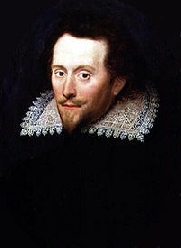
Cavendish - Duke of Newcastle upon tyne
Mad Madge
E11